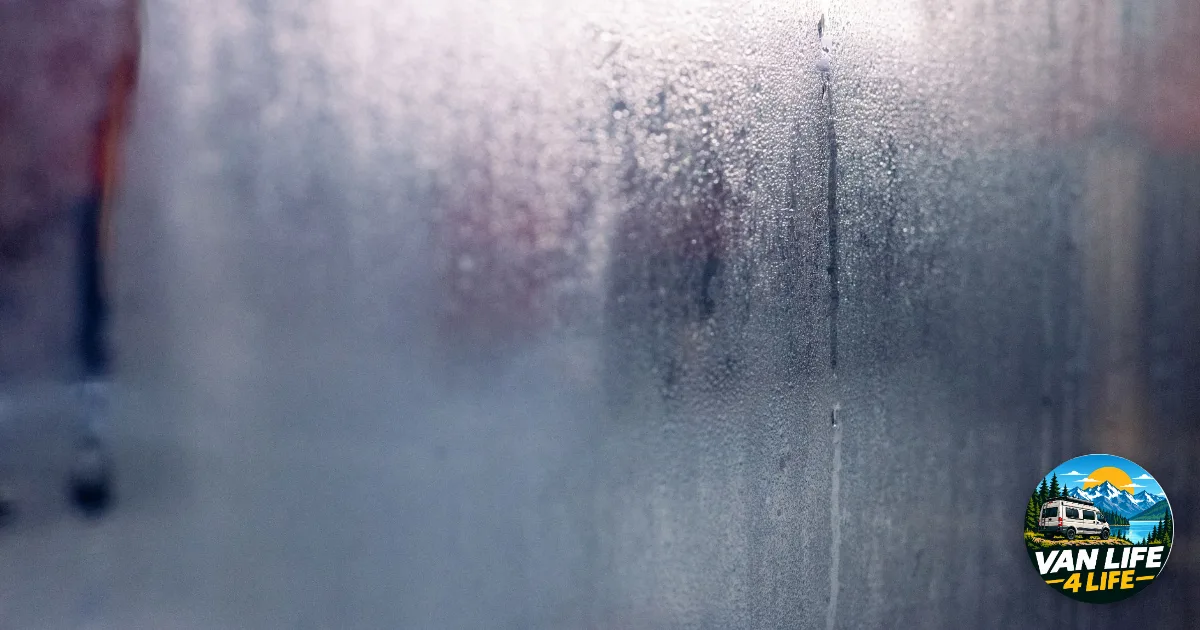
Campervan condensation forms when warm, moist air inside the van meets a cold surface, such as a window, bare metal or a wall panel, and its water vapour turns back into liquid. The moisture comes from life on board: breathing, cooking, showering and drying clothes. Ventilation is the first thing to get right, especially while you cook and dry things, according to the UK’s National Caravan Council. After that come a heater that sends its combustion gases outside and insulation that leaves no cold metal exposed.
1. Ventilate while you cook, shower and dry clothes, to keep campervan condensation down, and never block the gas safety vents.
2. Choose a room-sealed heater that takes its combustion air from outside and exhausts outside.
3. Let air move behind cupboards, under the bed and inside the wardrobe.
How campervan condensation forms
The National Caravan Council guidance note on condensation in tourers, motorcaravans and campervans puts it plainly: condensation is water changing from its gaseous form, water vapour, into liquid when it touches a cold surface. The key idea is the dew point, the temperature at which air can no longer hold all of its water vapour: the NCC notes that once a surface falls below it, condensation on the colder parts of the vehicle is quite normal.
A van brings both conditions together: a small volume of air that picks up moisture quickly, and a metal body that cools quickly as the temperature outside drops. That is why the first droplets usually show up on the glass, on bare panels and along the pillars.
Where the moisture that causes campervan condensation comes from
The NCC names the shower and the kitchen as the main sources of moisture in a leisure vehicle, and adds that the problem is compounded by the warm, moist air from normal breathing, which builds up all night in a small volume of air. The same note points to where it tends to form: inside cupboards and wardrobes, and under beds, places where air barely moves and that can sit right against the bodywork. Wet clothes, boots and towels drying inside add to the load, and the NCC specifically lists drying them among the situations where good ventilation is essential.
Ventilating without losing all your heat
Ventilation is the basic fix against campervan condensation: the aim is to get moist air out at the moment it is produced, before it settles on the walls. Caravans and motorhomes generally have ventilation panels fitted for gas safety reasons, and the NCC says not to cover them to keep the warmth in. On a van converted in France, the EN 721 safety ventilation standard is one of the requirements checked during VASP registration.
In practice, crack open a roof vent or a window while the kettle boils, run the roof fan if you have one, and give the van a proper airing for a few minutes after a shower rather than letting the steam hang around all evening.
Heating: part of the problem or part of the cure
Your choice of heater also affects campervan condensation. NSW Health, the health department of New South Wales in Australia, explains in its factsheet on unflued gas heaters that burning gas produces air pollutants and water vapour: a flued heater vents them outside, while an unflued heater releases them straight into the room. WorkSafe, the New Zealand regulator, says portable gas appliances such as cookers and heaters must never be used inside caravans or motorhomes because of the carbon monoxide risk.
Heaters designed for leisure vehicles work as sealed systems. Truma describes its S 5004 heater this way: outside air is drawn in through an inlet, heated by the burner flame, and leaves to the atmosphere together with the combustion air. A room-sealed heater warms the air and the walls without adding combustion vapour inside, which cuts condensation, as long as you keep getting rid of the moisture the occupants produce.
Insulation and vapour barriers against campervan condensation
Condensation forms on cold surfaces, so continuous insulation that covers the metal with no bare patches leaves fewer exposed, though the NCC warns that in very cold weather insulation alone may not be enough: ventilation is still needed. The material matters too, and our comparison of cork and Armaflex for van insulation looks at how those two behave around moisture.
Finally, leave room for air behind the furniture: a gap or vent holes at the back of cupboards and under the bed, with the mattress lifted slightly off the floor. That is exactly where the NCC places a good share of the condensation.
Habits that make campervan condensation worse
Three winter reflexes work against the advice above. Shutting every vent to keep the heat in traps the moisture along with the warmth and blocks ventilation that is there for gas safety. A portable gas heater on the worktop releases the water vapour from combustion straight into the room, and WorkSafe says these must never be used inside caravans or motorhomes at all. And drying wet clothes and boots inside overnight with the windows shut is exactly the situation where the NCC calls ventilation essential: if you cannot dry them outside, do it during the day with the roof fan or a window open.
Keeping campervan condensation down by type of use
| Use | Priorities |
|---|---|
| Weekends in mild weather | Air the van while cooking and on waking, keep the safety vents clear |
| Regular trips and colder months | Room-sealed heater, roof fan, window open a crack for cooking and drying |
| Full-time living and winter | Continuous insulation with no bare metal, air behind furniture and under the mattress, daily ventilation |
Start with ventilation, which costs next to nothing and deals with the source. If you heat the van, choose a room-sealed heater and never use a portable gas heater inside. Then deal with cold walls and airless corners, which is where campervan condensation eventually settles in.